Department of Conservation and Recreation
Conserve. Protect. Enjoy.
Department of Conservation and Recreation



Native species are those that occur in the region in which they evolved. Plants evolve over geologic time in response to physical and biotic processes characteristic of a region: the climate, soils, timing of rainfall, drought, and frost; and interactions with the other species inhabiting the local community. Thus native plants possess certain traits that make them uniquely adapted to local conditions, providing a practical and ecologically valuable alternative for landscaping, conservation and restoration projects, and as livestock forage. In addition, native plants can match the finest cultivated plants in beauty, while often surpassing non-natives in ruggedness and resistance to drought, insects and disease.
About the Native Plants for Conservation, Restoration, and Landscaping Project
This project is the result of a collaboration between the Virginia Department of Conservation and Recreation and the Virginia Native Plant Society, and was made possible by a grant from the National Fish and Wildlife Foundation and a NOAA grant from the Virginia Coastal Zone Management Program at the Department of Environmental Quality. Funds were also contributed by the Virginia Nurserymen's Association, the Virginia Chapter of the American Society of Landscape Architects, and the Lewis Ginter Botanical Garden.
In addition to those three organizations, the sponsors extend their considerable appreciation to the other collaborators who provided valuable advice and assistance throughout the life of the project:
Project participants share a commitment to protect native plant habitats, especially those that support rare, threatened, or endangered species. The use of native plant species--especially plants propagated from local populations--in land management, conservation, restoration, and horticultural projects will help maintain the ecological integrity of natural areas and preserve native biodiversity.
Printed copies of the native plant brochures by physiographic region listed above are also available on good quality 70# paper with colored ink For more information please contact:
Project Review Coordinator
For a list of nurseries that propagate native species, visit:
Virginia Native Plant Society
Visit the VA Nursery and Landscape Association(VNLA) grower guide to search for species.
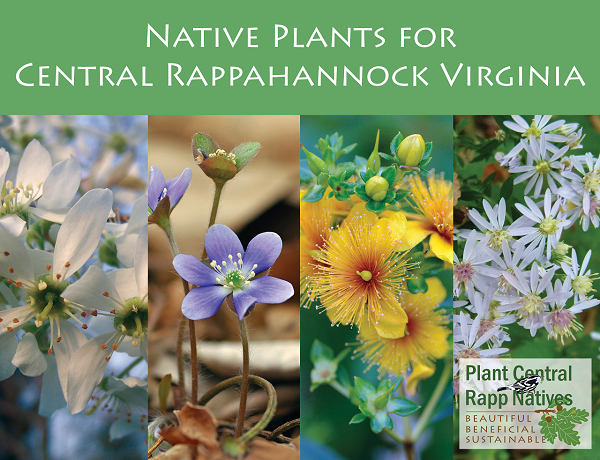
The Plant Virginia Natives regional native plant marketing partnership, initiated and coordinated by the Virginia Coastal Zone Management Program, has grown throughout the coastal zone, across the Piedmont and into the mountains.
There are now nine regional native plant campaigns in Virginia, and seven regional native plant guides have been published, and two guides are in production. Learn more about the campaigns and download all the regional guides at PlantVirginiaNatives.org .
The Digital Atlas of the Flora of Virginia provides range maps for plant species in Virginia