
Virginia Department of Conservation and RecreationAn official website of the Commonwealth of Virginia Here's how you knowAn official websiteHere's how you know
 Department of Conservation and Recreation



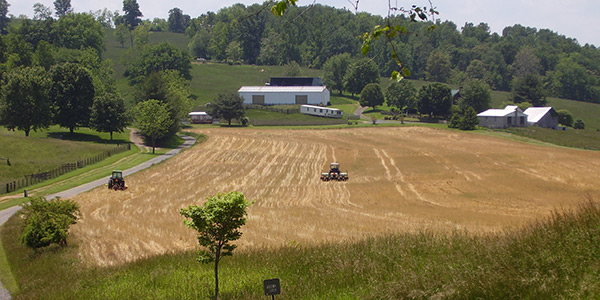
The Virginia Department of Conservation and Recreation (DCR) coordinates and directs programs and services to prevent degradation of the commonwealth's water quality caused by nonpoint source pollution.
Nonpoint source pollution is water pollution caused by runoff that is not from a single point, such as a wastewater treatment plant or industrial discharge pipe. Because NPS pollution is so diverse, approaches to addressing the sources must also be diverse. It requires numerous programs and involves a number of state, local and federal agencies, and the private sector.
Statewide nonpoint source pollution control programs and services support both individual natural resource stewardship and assist local governments with resource management. These statewide programs are funded through state agency budgets and federal grants. The funds, which support technical assistance, financial assistance, education and research, include funds from the federal Nonpoint Source Pollution Control Program (Section 319 of the Clean Water Act) and the Chesapeake Bay Program. These activities are targeted using a statewide system of 6th order watersheds analyzed for their potential for NPS pollution.
DCR's soil and water conservation staff administers nonpoint source pollution control programs required by state law. They include nutrient management, agricultural best management practices, resource management planning, shoreline erosion advice, and the administrative, technical and financial support of Virginia's 47 soil and water conservation districts.
The staff also administers the Soil and Water Conservation District (SWCD) dam safety program through which 12 districts are helped with the upkeep of 104 dams. The dams were originally built by the U.S.D.A. for flood control. DCR staff also helps support local efforts to protect citizens from flood hazards. A DCR engineer helps SWCDs with dam certification and serves as contract officer when structures need modification.
Staff members in the central office and seven regional offices deliver services through local governments and nonprofit groups, businesses and citizens. DCR staff in Richmond also serves as a resource for field staff.
Excess nutrients in runoff are a major threat to water quality. When it rains, the rain can cause erosion, pick up nutrients and chemicals, and run off into our waterways. On land, these nutrients help us grow crops and have nice lawns, but in runoff they sicken streams, rivers, lakes and bays. Nutrients can lead to harmful algal blooms that kill underwater plants and destroy habitat that aquatic life needs to survive. They can also lead to water with little or no dissolved oxygen, again to the detriment of aquatic life.
Nutrient management and soil and water conservation districts play a pivotal role in preventing such runoff. In fact, SWCDs have been in the business of fighting erosion and preventing pollution since the mid-1930s. Virginia's 47 districts focus mainly on on-the-ground work. DCR works closely with districts and farmers, urban and suburban landowners, and other land managers to cut this harmful runoff, but controlling runoff pollution is everyone's business. Each of us causes runoff pollution; each of us must work to reduce its effects.
The General Assembly established the VSWCB, which is supported by DCR staff, to guide the delivery of soil and water conservation services to citizens of the commonwealth.