Open fires are prohibited throughout the park from midnight to 4 p.m., Feb. 15 through April 30. Learn more.
History of Virginia State Parks
On June 15, 1936, Virginia became the first state to open an entire park system of six parks on the same day. The new parks offered modern outdoor recreational facilities while protecting areas with significant natural resources. Since then, the system has grown to 44 open parks. Each has natural and historical resources carefully managed and preserved while providing a wide variety of recreation for Virginia's residents and visitors alike.
 A visit to today's state park reveals a myriad of outdoor natural and historic experiences. Featured is some of Virginia's most spectacular scenery, such as Natural Tunnel in southwestern Virginia and the fragile coastal environment at False Cape in Virginia Beach. History, such as Mount Bleak House and the working farms at Sky Meadows and Chippokes state parks, is also there for the taking.
Parks offer boat access to most of the major bodies of water in Virginia, including the Commonwealth's four largest lakes, the Potomac River and the Chesapeake Bay. Camping and cabins have long been favorites of Virginia State Parks visitors. In addition, Virginia State Parks have offered the best in nature and history programming for more than 40 years, increasing the public's knowledge and understanding of the environment.
History
In June of 1936, the Commonwealth of Virginia opened a system of six state parks. The opening of the system placed a state park within an hour’s drive of most Virginians. The movement to create a state park system, however, had its beginnings a decade earlier.
1926 – The Seed is Planted
 In 1926, the Virginia Legislature created the State Commission on Conservation and Development. For the first time, the state had a single agency responsible for managing the conservation of its natural resources. Initially, the commission’s efforts with regard to parks centered around acquiring lands for Shenandoah National Park, the first large national park in the east. By 1929, as acquisitions for Shenandoah were nearing completion, things began to change.
On Dec. 17, 1929, representatives of the Virginia Academy of Science, the Garden Club of Virginia and the Izaak Walton League held a meeting in Richmond to discuss the need for state parks. This meeting resulted in each organization passing a resolution in support of creating state parks and presenting those resolutions to Governor-Elect John Garland Pollard. At about the same time, there was a movement to establish a large interstate park on the Virginia-Kentucky border at the Breaks of the Cumberland as well as a seashore state park.
This developing statewide interest in parks prompted the State Commission on Conservation and Development to study existing state park systems in the East. R. E. Burson, a Commission staff member, conducted the study in 1930. Burson traveled to several states in an effort to compare and contrast the various approaches to state park development, operation, maintenance, and administration. The recommendations resulting from the study guided much of the early development and management of Virginia’s system.
1933 – Opportunity and Preparedness Meet
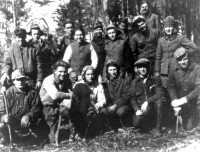
In 1933, shortly after the establishment of the Civilian Conservation Corps (CCC), William E. Carson, chair of the State Commission on Conservation and Development, entertained President Roosevelt at Camp Rapidan (formerly Camp Hoover) in the mountains near Shenandoah National Park. In that meeting, opportunity and preparedness met. When asked by Roosevelt what he thought of the newly created Civilian Conservation Corps, Carson observed that while the CCC boys were doing good work on federal lands, he felt that they might be better employed developing a system of state parks. The president soon replied that he would provide the necessary CCC men and materials if Virginia could demonstrate to the nation what such a system of parks would mean to a state. It took the commonwealth less than a year to acquire, by both gift and purchase, large tracts of land for its first six parks (Douthat, Fairy Stone, Hungry Mother, Seashore, Staunton River and Westmoreland).
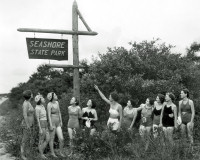
On June 13, 1936, Gov. George C. Peery presided over the official opening ceremony for the Virginia State Parks System. The ceremony was held at Hungry Mother State Park in Marion, Va. Thousands of Virginians attended the celebration, which included concerts, a water pageant and a bathing beauty contest. Two days later, the system’s first six state parks opened to the public.
1937-1951 – Slow but Steady Growth
The next 15 years exhibited slow but steady growth with the addition of seven new parks to the system. In 1937, the Division of Parks acquired 220 acres of land in Amelia County, which became Sailor’s Creek Battlefield State Park. It is the site of the last major battle of the Civil War.
 In the early 1940s, the division began managing Bear Creek, Holliday Lake, Goodwin Lake and Prince Edward recreational areas. The areas had been acquired in the late 1930s by the Federal Resettlement Administration to reclaim sub-marginal lands damaged by poor agricultural and forestry practices.
The Southwest Virginia Museum in Big Stone Gap was acquired from the family of Congressman C. Bascom Slemp in 1943. Today, the museum houses extensive exhibits on the early settlement of Southwest Virginia.
Following several years of negotiations with the National Park Service (NPS), the commonwealth took possession of Swift Creek Recreation Demonstration Area, near Richmond, in 1946. The NPS acquired the site in the mid-1930s and developed it using CCC labor. The area was originally intended to serve as a group camp for inner-city youths in Richmond. Soon after the state took possession, it was renamed Pocahontas State Park. The addition of Pocahontas increased the total acreage of the state park system by more than a third, and the 7,950-acre park remains the largest in the system.
 In 1948, land was purchased for the development of a state park on Claytor Lake, in Pulaski County, in the western part of the state. Citizens in surrounding communities donated half the purchase price, and the Radford Chamber of Commerce operated the park during the summers of 1949 and 1950. The state parks division assumed operation of the park in 1951, after building 12 vacation cabins. A new bathhouse, swimming beach, picnic facilities and parking areas were soon added.
1948 - 1964 – Racial Integration of State Parks
From its inception in 1936 until 1950, the Virginia State Parks system made no accommodations for people of color. Like most Southern states, in the decades following the Civil War, Virginia enacted a series of Jim Crow laws that mandated segregation in all public facilities, with supposedly separate but equal facilities for Black Americans and other non-whites. In the mid-20th century, however, the Supreme Court began to overturn Jim Crow laws as unconstitutional.
In 1948, Maceo Martin, an African-American man from Danville, Va., tried to enter Staunton River State Park and was refused. Martin subsequently filed suit against the Virginia Conservation Commission to test the validity of the commission’s policy of not providing overnight facilities in state parks for persons of color. According to the Board of Conservation and Development minutes of Dec. 2, 1948, the commission “desiring to provide comparable facilities for the Negroes decided to expand the facilities of the Negro recreational area in Prince Edward County.” Thus, in 1950, in keeping with the separate but equal doctrine, Virginia opened Prince Edward State Park for Negroes, with facilities comparable to those in other state parks. The other eight Virginia state parks, however, continued to operate under a policy of racial segregation.
Another racial discrimination suit was filed in the U.S. District Court on June 21, 1951, by a group of African Americans who were denied admission to Seashore State Park in Virginia Beach. Before the case came to trial, however, the plaintiffs requested a continuance of the case. The reason for the request was a pending decision in the Brown v. Board of Education case before the U.S. Supreme Court, on racial segregation in public schools. In a landmark decision in the Brown case on May 17, 1954, the Supreme Court ruled that school segregation by race was unconstitutional. It was clear, however, that the high court’s ruling would have implications far beyond the integration of public schools. Shortly after the Brown decision, the plaintiffs in the Seashore suit filed a motion to reopen their case.
 In order to continue its policy of segregation in state parks, the Board of Conservation and Development began to explore a variety of options. The options considered included the closure or sale of the entire state park system. In January 1955, the board opted instead to lease Seashore State Park to a private operator on an experimental basis. If this allowed parks to remain racially segregated, the plan was to lease the remaining parks in the system. This would allow the board to continue to own and protect the state’s sizable financial investment in the parks without having to racially integrate them.
It was the opinion of the lawyers for the plaintiffs that the state was attempting to continue to operate Seashore State Park on a segregated basis through the use of the lease program, so they sought an injunction to prevent it. The state claimed that it had no control over whether or not the lessee would permit people of color to use the park. In granting the injunction, the court agreed with the plaintiffs and held that the purpose of the lease appeared to be a way to circumvent the suit and allow the state to continue operating the park on a segregated basis. The state appealed the decision, but made the decision to close the park in 1955, pending the outcome of their appeal.
The following year, on April 9, 1956, the Federal Circuit Court of Appeals affirmed the lower court’s decision, and the state filed an appeal with the U.S. Supreme Court. On Oct. 9, 1956, the Supreme Court rejected the state’s plea that it review and overturn the lower court’s decree. Following the Supreme Court decision, Virginia Attorney General J. Lindsey Almond Jr. suggested to the press that Virginia should get out of the park business as quickly as possible. Fortunately, for Virginia and its citizens, that did not happen.
In the years following the closure, citizen groups, most notably the Princess Anne Garden Club, as well as the Virginia Beach and Norfolk Chambers of Commerce and the local press, began to pressure state authorities to reopen Seashore State Park. The mounting pressure resulted in a gradual, incremental reopening of the park and its facilities. At a meeting on March 13, 1959, between the Board of Conservation and Development and then Gov. J. Lindsey Almond Jr., it was decided that Seashore’s recreational facilities would remain closed, but that the board would grant permits for students and other qualified groups to enter the park for educational studies. The following year, 1960, the undeveloped portion of the park, including its extensive trail system, was opened to the public. These initial openings increased pressure on the state to reopen camping and cabin facilities. In August 1962, the board, with the support of Gov. Albertis S. Harrison Jr., voted to reopen the campground for the 1963 season, on a desegregated basis. The beach and the cabins, however, remained closed.
In 1964, Congress passed the Civil Rights Act, outlawing segregation in U.S. schools and public places. Passage of the act effectively ended the policy of segregation in Virginia’s State Park System, and minutes of the board show no further discussions of the issue. In February 1965, funds were appropriated to refurbish the cabins at Seashore, and the entire park was soon opened to the public on an integrated basis.
1952-1964 – New Programs Emerge
 While no parks were acquired between 1952 and 1964, the state parks division undertook two major initiatives, which continued to have a positive impact on the conservation of Virginia’s natural and cultural resources. The first initiative was the creation in 1960 of a Natural Areas System. The goal was to preserve, in unspoiled condition, representative examples of each of Virginia’s major landforms. The new program got off to a fast start with the acquisition of five major Natural Area Preserves between 1960 and 1964. The Natural Areas Preserve System is now part of a much larger effort to conserve Virginia’s biodiversity. Managed by the Virginia Department of Conservation and Recreation’s Natural Heritage Program staff, the system has grown to more than 60 areas totaling more than 55,000 acres.
The second initiative began in 1962. To help the growing number of state park visitors better understand and appreciate diverse natural and cultural features managed by state parks, the division launched a formal interpretive program. The effort began with the establishment of a state naturalist position and the hiring of seasonal naturalists at six of the larger state parks. Visitor interest resulted in dramatic growth in the interpretive program over the years, and it now constitutes a major factor in park guests’ experience. Each year, full-time and seasonal staff and volunteers conduct more than 15,000 interpretive programs attended by more than 350,000 park guests. In addition to personal services, the interpretive program includes numerous visitor center and nature discovery center exhibits, signed interpretive trails and interpretive brochures.
1965-1976 – A Dramatic Renewal of Growth
The 1960s brought an increasing realization that the American parks and conservation movement had not kept pace with population growth and changing demographics. In the mid-1960s, the Virginia General Assembly created the Outdoor Recreation Study Commission.
The commission was to inventory and evaluate Virginia’s natural and recreational resources and develop a plan of action to meet current and future demand for outdoor recreation. The resulting plan, entitled “Virginia’s Common Wealth.” set the course for a major program to preserve outdoor recreation opportunities for the state’s rapidly growing population. The General Assembly’s adoption of the plan qualified the state to participate in the new, federally funded Land and Water Conservation Fund (LWCF) program.
One major element of the new statewide comprehensive outdoor recreation plan was the expansion of the state park system. Beginning in 1965, with the acquisition of Grayson Highlands in far southwestern Virginia, 12 parks were added to the system over the next decade. Grants from the LWCF made this rapid expansion possible—four of the new state parks opened for limited use while still under development. Unfortunately, funding for increased staffing and facility development lagged well behind that acquisition, and the remaining eight new parks did not open to the public for more than a decade.
1976-1990 – A Focus on Development
While the previous decade marked dramatic growth in the number of parks in the system, the following 15 years were primarily devoted to infrastructure and facility development. Roads, trail systems, visitor centers, picnic areas and campgrounds were added to the newer parks and, by 1989, all were operational and open to the public.
The lone addition to the system during the period came in 1987, when Norfolk Southern Corp. donated 57 miles of abandoned railroad right-of-way in southwestern Virginia to the commonwealth. The donation, part of the national “Rails-To-Trails” movement, gave Virginia its first linear state park. The 44-mile trail parallels the scenic New River.
1990-2002 – Bond Issues Spur Growth
With but one park acquisition in the previous 15 years and aging facilities and infrastructure throughout the system, state parks needed a financial shot in the arm. In 1992, the General Assembly provided for a shot by authorizing a general obligation bond referendum for parks and open space in the amount of $95 million. Voters approved the bond issue by a two-to-one margin.
In addition to the acquisition and development of five new parks and 15 Natural Area Preserves, bond funds enabled the construction of 296 campsites and 203 cabins, as well as the building of numerous picnic shelters, boat ramps, bathhouses, visitor centers, restaurants, education facilities, and amphitheaters, all of which were badly needed. Five of the six newly acquired parks were open to the public in the late 1990s.
Following the successful 1992 General Obligation Bond Referendum, the governor and legislature began to understand that the $95 million spent to improve existing parks and to acquire and develop new parks had placed a substantial operational and maintenance burden on the system. Operational funding had not been re-benchmarked to reflect the cost of operating the new and improved facilities. The situation placed stress on the entire park system.
In 1994, DCR’s parks division hosted the Annual Conference of the Association of Southeastern State Park Directors in Virginia Beach.
In the late 1990s, DCR undertook a serious effort to secure a re-benchmarking of its annual operational funding. The Virginia Association for Parks, a statewide citizen support organization founded in 1997, helped generate legislative and citizen support for the effort.
2000 – The New Millennium
In 2000, as the efforts to obtain additional staffing and operational funding were underway, statewide citizen interest prompted the General Assembly to authorize another general obligation bond for state park acquisition and development, this time for $119 million. Voters overwhelmingly approved the bond issue in 2002.
Although not all projects are yet complete, funding provided by the bond will result in 63 new cabins and family lodges, 12 new camping cabins, nine new visitor centers, nine new campgrounds, and seven new equestrian campgrounds, as well as the acquisition of five new parks. The bond funds will also enable much-needed improvements to existing facilities and infrastructure at most parks.
Virginia’s state park system in 2001 became only the third recipient of the biennially presented National Gold Medal Award for excellence in parks and recreation management. The National Gold Medal Award recognizes the state park system considered most outstanding in the field of recreation management and which best provides park, recreation and leisure services to its citizens. DCR’s parks division used its gold medal status in marketing efforts, which significantly raised the profile of state parks in the eyes of local, state and out-of-state park visitors.
In 2002, the Commission on the Future of Virginia’s Environment helped with DCR’s effort to secure additional park operation funding. In a report to the governor and General Assembly, the commission recommended funding for 112 additional full-timers; additional wages for part-time and seasonal staff; and funding for preventive maintenance, new vehicles and equipment. Although the commission’s recommendations have yet to be fully implemented, substantial progress has been made with the addition of more than 100 new positions and critical operational and maintenance funding.
In recognition of the valuable role that the Civilian Conservation Corps played in shaping the lives of young men in the 1930s, DCR’s parks division initiated the Virginia State Parks Youth Corps Program in 2002. The program provides teenagers with job, citizenship and leadership skills through the completion of conservation and maintenance projects. Another goal of the program is to help participants develop an understanding of and appreciation for the environment. The Youth Corps program offers three service project options. In the Youth Conservation Corps (YCC) option, participants work in a supervised, residential setting in a state park, completing conservation and maintenance projects during a three-week summer camp. The Youth Service Corps (YSC) is a non-resident program targeting at-risk teens, and the Youth Development Corps (YDC) is a weekend-only program. From 2002 to 2007, 968 young people and 261 crew supervisors participated, contributing 154,527 volunteer hours worth an estimated $3 million to state park conservation projects. By the end of the 2008 season, every park in the system will have hosted at least two YCC teams. In 2007, Gov. Tim Kaine honored the Youth Conservation Program as the “best youth volunteer program in Virginia.”
In September 2007, Virginia State Parks hosted the National Association of State Park Directors (NASPD) Annual Conference and a joint meeting of the NASPD and the National Park Service Leadership Council. That meeting attracted park leaders from 48 of the 50 states, Puerto Rico, Canada and the National Park Service Leadership Council. In a joint session, the state and national parks signed a "Children and Nature Plan for Action" that urged them to work together to connect children and families with nature and to provide each other with resources, marketing, and programming to better serve park visitors.
The Virginia Association for Parks, represented by its President Johnny Finch, received the NASPD President’s Award for exemplary service to Virginia’s State and National Parks. Virginia’s State Parks Director Joe Elton was honored with the NASPD Distinguished Service Award “... in recognition of many years of dedicated service and inspired leadership to the conservation, interpretation and enhancement of our nation’s natural and cultural state park treasures.”
In the years between 2010 and 2019, our parks have seen a steady rise in visitation and opened three new parks with more on the horizon. Programming continues to bring meaningful interpretation to help all visitors understand and connect with the stories of our parks. In 2019, over half a million visitors participated in interpretive and environmental education programming.
2020 and Beyond
2020 will be remembered for its highs and lows. We hired Melissa Baker, the first woman to become a Virginia State Parks Director, and have weathered the storm of a global pandemic, which has changed the way we operate our parks. We are looking closely at how we can continue to improve in the most inclusive and accessible ways possible so we can truly be a state park system for all.
We opened new parks, like Sweet Run and Machicomoco, took over the management of significant historical landscapes like Green Pastures, managed by Douthat, officially took ownership of Natural Bridge, and acquired land for a new park at Hayfields. With new parks coming and the lessons learned from this challenging year, we will carry forward with our mission to provide recreational and educational opportunities for the citizens of the Commonwealth and her visitors in such a way that leaves them unimpaired for future generations.
Support for State Parks
With increasing visitation and public support, the addition of parks and facilities and improvements to existing parks, Virginia’s citizens and elected officials have shown their commitment to maintaining a dynamic state parks system for a rapidly growing population. Virginia’s state parks are supported because they are:
- A vital tonic for the mind, body and spirit. Outdoor recreation and connecting with nature are important to mental and physical health.
- Places where our natural and cultural treasures are conserved. Flora, fauna and cultural resources are maintained for future generations.
- Economic engines that fuel the local and state economy. Tourism and outdoor recreation are essential to Virginia’s economy. Virginia State Parks are important contributors to the state’s economy. They generate more than $224 million in economic activity annually and help support more than 2,500 jobs.