Open fires are prohibited throughout the park from midnight to 4 p.m., Feb. 15 through April 30. Learn more.
False Cape State Park
4001 Sandpiper Rd., Virginia Beach, VA 23456; Phone: 757-426-7128; Email: FalseCape@dcr.virginia.gov
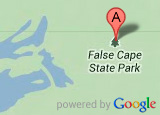
Latitude, 36.593813. Longitude, -75.886521.


Photos and video



This content takes priority over any other information provided on this park's webpage.
The park is open sunrise through sunset daily. Please note that guests must be out of the refuge within 30 minutes of sunset. Guests may access the park by foot, bike, or paddle craft. The visitor center is open daily from 9 a.m. to 4 p.m.
Although welcome at False Cape State Park, USF&WS regulations prohibit pets, therefore accessing False Cape State Park with pets through Back Bay National Wildlife Refuge is not allowed.
Back Bay National Wildlife Refuge interior trails, including East Dike and West Dike trails, are closed from Nov. 1 through March 31, during which park access is restricted to hiking or bicycling along the beach or by boat.
The Wash Woods Lodge is open. Please call the park to make your reservation
Parking at Back Bay National Wildlife Refuge fills quickly in the summer. Additional parking and overnight parking is available at Little Island City Park.
Reservations for primitive campsites MUST be made by calling 1-800-933-PARK.
All Tram Tours require a reservation. To see a list of available dates and make a reservation click here.
Please review the Virginia State Parks Know Before You Go information before you visit.
General Information
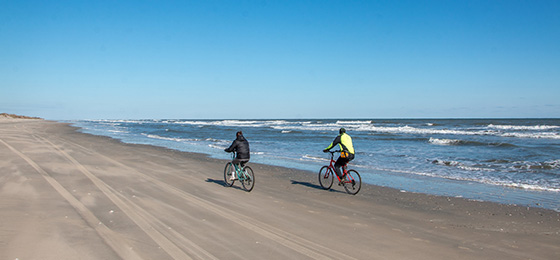
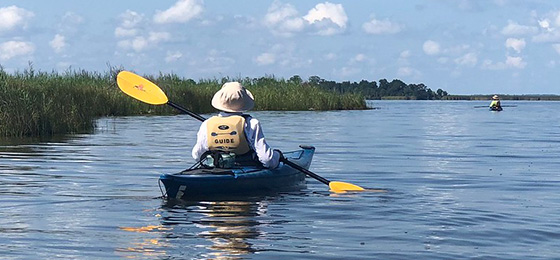
Nestled between Back Bay and the Atlantic Ocean, False Cape State Park is one of the last remaining undeveloped areas along the Atlantic coast. As the former home of the historic Wash Woods community, False Cape honors the hardy souls who made a living from the sea. The park offers an opportunity to experience nature in a unique, primitive setting. Be prepared for weather conditions. Bring plenty of water, sunscreen and insect repellent. False Cape features guided kayak trips, primitive camping, interpretive programs, hiking and biking trails, and 6 miles of pristine Atlantic Ocean beach. The park is accessible only by foot, bicycle or boat. Public vehicular access is not allowed at any time. Back Bay National Wildlife Refuge interior trails, including East Dike and West Dike trails, are closed from Nov. 1 through Mar. 31, during which park access is restricted to hiking or bicycling along the beach or by boat. Day-use and overnight visitors should read all recommendations regarding visiting the park to be fully prepared. Visitors must follow refuge and False Cape State Park rules and regulations. While pets are allowed in False Cape, you cannot bring them through Back Bay.
The park operates a tram tour that leaves from the Back Bay National Wildlife Refuge (4005 S. Sandpiper Road in Virginia Beach) and travels through the wildlife refuge. The tram gives visitors a chance to explore the park's Barbour Hill area and Wash Woods historic site. All Tram Tours require a reservation. To see a list of available dates and make a reservation click here.
Trail access
For day-use visitors, parking is available at Back Bay National Wildlife Refuge visitor center parking lot. Back Bay has East Dike and West Dike trails that lead to False Cape State Park. Only one of those trails is open at a time. Pay attention to refuge signs indicating which trail is open.
Hours
Dawn to dusk. Those visiting the park through Back Bay National Wildlife Refuge must be out of the refuge by dusk.
Location
From Interstate 64, exit on to Indian River Road East. Go 13 miles, then turn left onto Newbridge Road, then right onto Sandbridge Road. Next, turn right onto Sandpiper Road to Little Island City Park. Parking fees are required from Memorial Day to Labor Day. Day-use only parking also is available at Back Bay Wildlife Refuge.
From First Landing State Park and oceanfront, turn east onto Shore Drive (Route 60); follow Pacific Avenue to General Booth Boulevard, then left on Princess Anne Road and then straight onto Sandbridge Road. Turn right onto Sandpiper Road to Little Island City Park. Parking fees are required from Memorial Day to Labor Day.
The park's latitude is 36.593813. Its longitude is -75.886521.
Drive Time: From Virginia Beach's oceanfront to Little Island city parking lot is about 40 minutes.
Park Size
4,321 acres. Beach Size: 5.9 miles of beachfront, extending to the North Carolina line.
Follow us

Cabins, camping
OVERNIGHT FACILITIES
Primitive camping year-round. No cabins. The park does not offer same-day reservations. For information on the availability of overnight accommodations and particular amenities or to make a reservation, call (800) 933-PARK. Click here for park fees.
All campers must receive their confirmation letter and information packet before camping at this park. Carefully and thoroughly read the information you receive. False Cape is unusual and can be unpleasant for those who are unprepared. The packet is generally sent via email, but if you need it sent by postal mail, be sure to allow enough time to receive it. No exceptions. All overnight guests must bring two copies of their confirmation letter. One must be placed on the dashboard of their vehicle; the other clipped to the site marker.
Because False Cape is very primitive and has unusually restrictive access, reservations are not available online. For safety's sake, please take the time to carefully read and follow the information below.
- Parking is never available at Back Bay National Wildlife Refuge for overnight guests. Campers must instead park at the Little Island City Park, leave a copy of their confirmation letter on the dashboard, and walk from five to nine miles through Back Bay Refuge to the park’s campsites. Overnight parking must be paid by using the “ParkWhiz” app, available for download from The Android and Apple stores.
- Pets are not allowed access to the park through the Back Bay National Wildlife Refuge. See below for more information.
- Beach camping is subject to tides. During significant high tide events, the park may close the campsites.
- All park guests are subject to Back Bay Refuge and Little Island City Park's rules and regulations.
- Campers must be out of the refuge before sunset when arriving and departing False Cape State Park.
- Be prepared for biting insects during summer. They are very common.
- Little Island City Park in Virginia Beach - the place from which most visitors depart to False Cape - is closed on New Year's Day, Martin Luther King Day, at noon the day prior to Thanksgiving Day, on Thanksgiving Day, at noon on Christmas Eve and on Christmas Day.
- On days when Little Island City Park is closed, False Cape staff will meet incoming campers at 1 p.m. sharp to let campers park and enter with enough time to hike, bike and set up camp before nightfall (about 5 p.m.). Please call the park in advance and confirm that you will be parking at the City lot.
Rental rates for cabins and camping vary by season, offering and park. Rates are subject to verification by DCR's state parks reservations staff (1-800-933-PARK). First determine the season, which varies by park, then the rate. Click here for park fees.
Camping
Camping is permitted year-round, but reservations are required. Same-day reservations aren't taken for False Cape. Campsites at the park are in four distinct areas - Barbour Hill Bay, Barbour Hill Ocean, False Cape Landing Bay and False Cape Landing Ocean - which are separated by significant distances. For camping information, contact the Customer Service Center at 1-800-933-7275.
The park accommodates tents-only primitive camping. Drinking water is available at three locations in the Barbour Hill area (one by the contact station and two in the camping areas). False Cape Landing campers must bring their own containers to transport water from the water source. Water that's adequate for washing dishes but not for drinking is available in the False Cape Landing area. There are several pit (i.e., non-flushing) toilets. Open fires are not permitted; camp stoves may be used for cooking. Carry everything in and everything out.
Campers should also be aware that groups of 10 or must get a special-use permit from the refuge at least two weeks in advance of their trip. There's no vehicular access to this park. Passage by foot or bicycle only, and only during daylight hours, is allowed through the refuge. Vehicular access through the refuge and False Cape State Park is prohibited, and violators will be prosecuted for trespassing.
Distances to False Cape campsites from Little Island City Park: Little Island City Park to Barbour Hill visitor center, 5.6 miles; Little Island City Park to Barbour Hill Bay or ocean sites, 6.9 miles; Little Island City Park to False Cape Landing bay sites, 8.2 miles; Little Island City Park to False Cape ocean sites, 8.4 miles
False Cape has four primitive campgrounds.
- Maps showing locations of specific sites can be found here. Please note
that the green areas do not represent shaded areas. - No more than four people per site are allowed at Barbour Hill Bay Side, Barbour Hill Ocean Side and False Cape Ocean Side campgrounds
- Up to six people per site are allowed at False Cape Bay Side campground.
- Campers may reserve as many sites as desired so long as the maximum capacity is not exceeded.
- Camping at False Cape State Park is not recommended for young children, inexperienced campers, or those who need access to emergency medical care.
- There is no electricity. Pit toilets only.
- Campers must park at Little Island City Park (see above under "Overnight Facilities" for holidays during which access to this parking lot is limited). Campers must leave their confirmation letter on the front dashboard where it is clearly visible. If they do not, their car will be towed. Little Island Parking fees are collected from May 1st - September 30th. Overnight parking must be paid by using the “ParkWhiz” app, available for download from The Android and Apple stores. Visit City of Virginia beach Parking Management website for additional information.
- Boat access: You can launch your canoe or kayak from Little Island City Park. Boat docks are provided at Barbour Hill and False Cape Landing. Only experienced boaters familiar with Back Bay, which is large, should attempt to access False Cape by boat. In particular, shifting winds can dramatically affect water depth and navigation, making it unsafe for many boaters. The park charges those unable to paddle out a fee to transport their boats out of the park.
- Interior access: Cannot be used from November 1 through March 31 because of wildlife management. You can only be on refuge property during daylight hours. Groups with more than 10 members must obtain a special use permit from the refuge. Fees are subject to change.
- Beach: Plan to travel near low tide for the easiest access. You can only be on refuge property during daylight hours. These fees, which are federal, are subject to change.
- Ticks and biting insects are numerous; insect repellent is a must. Also, beware of venomous eastern cottonmouth snakes.
- All trash must be packed out when you leave.
- Pets are allowed at False Cape but not allowed through the Back Bay National Wildlife Refuge. Pets can be brought in only by boat to one of three landings in the park or through the North Carolina entrances.
- All fees are subject to change.
Recreation
TRAILS
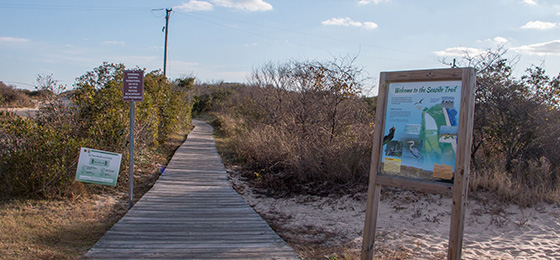
Hiking, bicycle trails and self-guided trails. Five trails total 15.3 miles. They are available for hiking, biking and exploration. The park’s location on a barrier spit allows visitors to observe beaches, dunes, maritime forests of oak and pine, wooded swamps, marshes and the bay all in one visit.
SWIMMING
There are no designated swimming areas.
FISHING, BOATING
Fishing - Freshwater and saltwater fishing with a valid Virginia fishing license. Boats - Motorboats permitted.
HORSES
None - no horses allowed.
Park Trail Guide
Click here for the park's trail guide.
Download (external link for use with Avenza App) the geo-referenced map
Download the geo-referenced map for this park
Nearby Attractions
Picnic Shelters
The park has no shelters, but there are picnic tables at the visitor center and at boat docks at Barbour Hill, False Cape Landing and Wash Woods.
Meeting Space and Facilities
MEETING FACILITIES
None at this park.
VISITOR CENTER, GIFT SHOP
Be sure to stop by the visitor center in the Barbour Hill area to learn about the park's history and upcoming events. The gift shop also has cold drinks, ice cream, T-shirts, camping supplies and souvenirs.
RESTAURANT:
None at this park.
LAUNDRY
None at this park.
Other Info
ACCESSIBILITY
- The visitor center meets ADA standards.
- Throughout the year, the park operates a tram that is available with advance notice. The tram runs through Back Bay National Wildlife Refuge to False Cape. Riders may explore the Barbour Hill area or the Wash Woods historic site. Wheelchair users are limited to the roadways in the immediate vicinity of the contact station because deep sand is prevalent beyond that area. The park's visitor center has a beach-accessible wheelchair for those wanting to explore beyond the area.
- Those with various ability levels who do not require wheelchairs will find the park usable within their mobility limits. Certain health conditions may limit accessibility.
NATURE, HISTORY PROGRAMS
False Cape offers astronomy programs, wildlife tours, birding hikes, night hikes, kayak tours and special group tours. The park also offers field trips and overnight experiences that focus on environmental education. Click here to view all parks' events, festivals, workshops and interpretive programs.
PHOTOGRAPHY
Professional photography in the park is permitted by Special Use Permit only. To apply for a special use permit for professional photography, please download this application and email the completed form to falsecape@dcr.virginia.gov.
CONCESSIONS
None.
HISTORY
In the 1800s, False Cape gained a reputation as a shipping graveyard. The area got its name because its land mass resembled Cape Henry, luring boats into shallow waters. One of the area's first communities, Wash Woods, was developed by survivors of such a shipwreck. The village's church and other structures were built using cypress wood that washed ashore from the wreck. From the turn of the century until the 1960s, False Cape was a haven for a number of prestigious hunt clubs, which took advantage of the area's abundant waterfowl. The park's Wash Woods Environmental Education Center is a converted hunt clubhouse. A 1966 study of Virginia's outdoor recreation resources recommended that a substantial ocean beachfront be made available for public use on the Atlantic Ocean south of Virginia Beach. The development of the park began with the purchase of approximately 4,300 acres of land.
FRIENDS GROUP
Join the Friends of False Cape State Park. The nonprofit citizen group provides voluntary help to DCR for the preservation and conservation of the park. The group educates the community about park offerings and supplies funds, materials and labor for special projects. Its success depends on those who appreciate the outdoors and wish to preserve this special place. Members enjoy special friends-only events throughout the year. Learn more about the group by calling or emailing the park.
MASTER PLAN
Master plans must be written for parks before they're built. The plans are updated at least once every 10 years thereafter. The plans cover the size, types, infrastructure and locations of facilities as well as the site's special features and resources. Three public meetings are held during the initial development of each plan. Click here for this park's master plan.
Events, Programs
- 04/18/2026 - False Cape Beach Cleanup
- 04/18/2026 - Blue Goose Wildlife & History Tram Tour
- 04/19/2026 - False Cape Beach Cleanup
- 04/19/2026 - Blue Goose Wildlife & History Tram Tour
- 04/20/2026 - False Cape Beach Cleanup
- More events at this park.

Blogs
- Virginia birds in "The 12 Days of Christmas"
- Winter Wildlife Adventures at Virginia State Parks
- Holiday shopping at Virginia State Parks
- See Virginia’s fall colors in a whole new way: Join a ranger-led adventure
- Seven September adventures
- More blogs about this park.
At a Glance